Wood-frame construction remains the primary structural choice for multi-family projects across the United States. While podium and wood frame-style designs are now common, protecting movement gaps within these assemblies has long been a challenge. Until recently, maintaining fire-resistance continuity at linear expansion joints in wood-frame floors and walls often relied on engineering judgments or modified assemblies rather than systems tested specifically for those conditions.
For many years, expansion joint fire barriers were tested almost exclusively in concrete floor and concrete or metal stud wall assemblies. When those systems were applied in wood frame buildings, project teams often relied on various engineering judgments to justify untested conditions.
Wood-frame construction responds differently to fire exposure and structural movement than rigid masonry. Materials are subject to moisture variation, thermal cycling, wind loading, and seismic forces which all influence joint behavior uniquely in wood-based structures.
Movement at expansion joint locations in wood structures commonly twists and bows in addition to expansion and contraction, which is different from concrete buildings. Concrete is a continuous material in all directions, whereas wood frame construction has multiple varying layers of materials that are not symmetrical from the floor surface level down to the level ceiling below. Systems tested only in concrete assemblies do not reflect these conditions, making it difficult to effectively evaluate and verify rated continuity at joints in wood-frame construction.
UL listings are now available for fire-resistive expansion joint assemblies tested specifically for wood frame floor and wall construction. These assemblies are evaluated under UL 2079 and ASTM E1966 and align directly with International Building Code (IBC) requirements for linear joint systems. For more information, reference UL Listings FF-D-0168, FF-D-0169, FF-D-0170 and FF-D-0171 by the UL Product iQ database..
Balco’s MetaBlock® Fire-Rated Expansion Joint Barriers is an example of a system developed and tested to reflect how wood frame buildings are actually constructed, rather than adapted from concrete-based designs. When installed in accordance with the UL listing, these assemblies provide documented fire-resistance continuity at linear expansion joint locations.
When a listed assembly is specified and installed as tested, plan reviewers and inspectors have a clear reference to utilize and rely on for an effective solution. This reduces interpretation during plan review and provides verifiable documentation during field inspection.
For architects and specifiers working in wood frame construction across the United States, the availability of UL-listed expansion joint assemblies fills a long-standing gap. MetaBlock® Fire-Rated Expansion Joint Barriers provides the industry’s first, documented alternative to engineering judgments at linear expansion joint locations. Tested, UL-listed assemblies support clear-cut specifications, reduce interpretation during plan review, and give inspectors a verifiable reference when installed conditions match the applicable listing.
Balco’s MetaBlock® Fire-Rated Expansion Joint Barriers are tested and UL-listed specifically for wood frame floor and wall assemblies, afirst in the industry for this product application. Many expansion joint fire barriers are tested only in concrete assemblies and rely on engineering judgments when applied in wood construction. MetaBlock® does not require mechanical attachments for installation, so it does not compromise the construction materials.
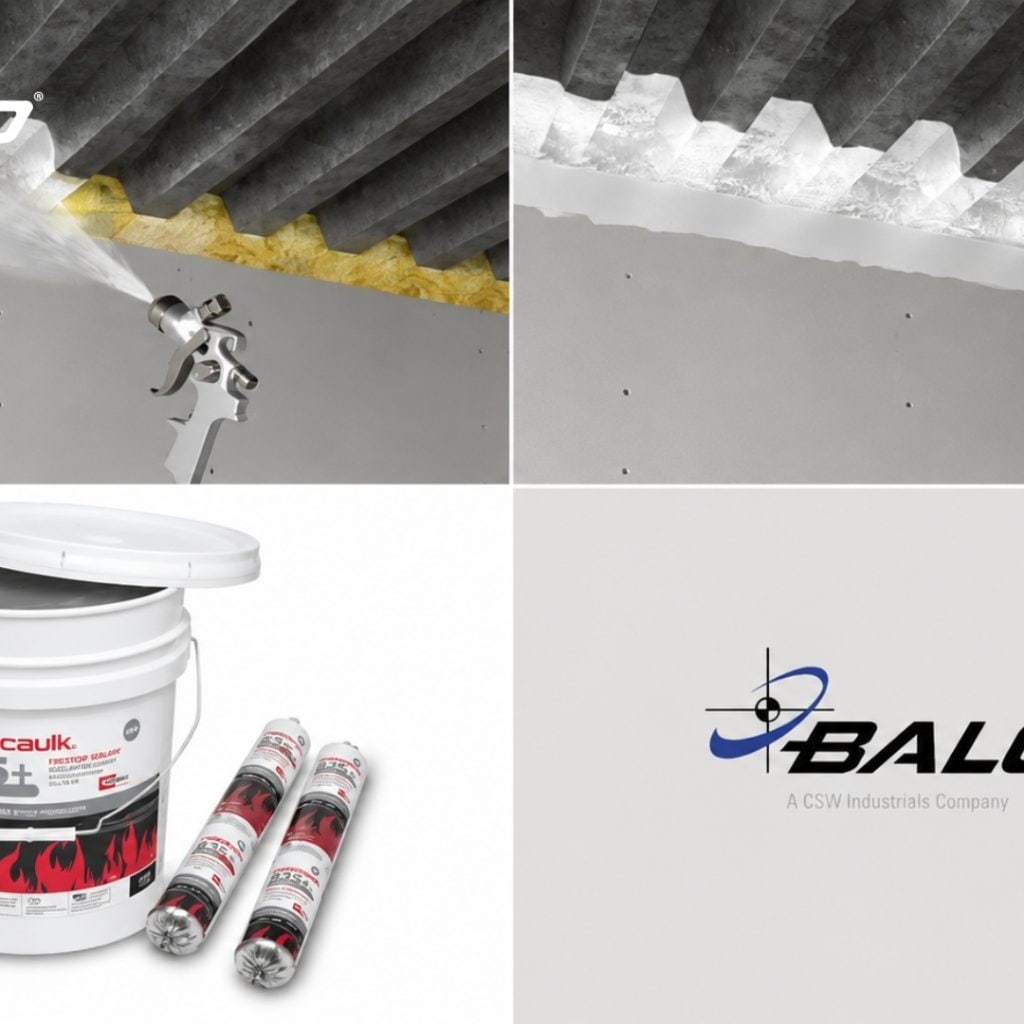
Balco’s MetaBlock® provides the fire-resistive barrier at linear expansion joint locations. Firestopping products may still be required at penetrations, perimeter conditions, and adjacent assemblies, depending on the overall fire-resistance strategy and code requirements.
Balco’s MetaBlock® systems are available in 2-, 3-, and 4- hour configurations, with additional assemblies supporting projects with elevated fire-resistance requirements.
Measure visits to and usage of the Website. The data is aggregated to help us understand which pages are viewed most, whether visitors receive error messages from specific pages, and how to improve the Website.